

05
Each session is unique. Your experience may include some of these. Many of them, or none of them.
THERE IN NO SINGLE PNEUMA TRANCE EXPERIENCE®
WHAT YOU MAY EXPERIENCE

01
WHAT TO EXPECT
A 90-minute guided journey inward.
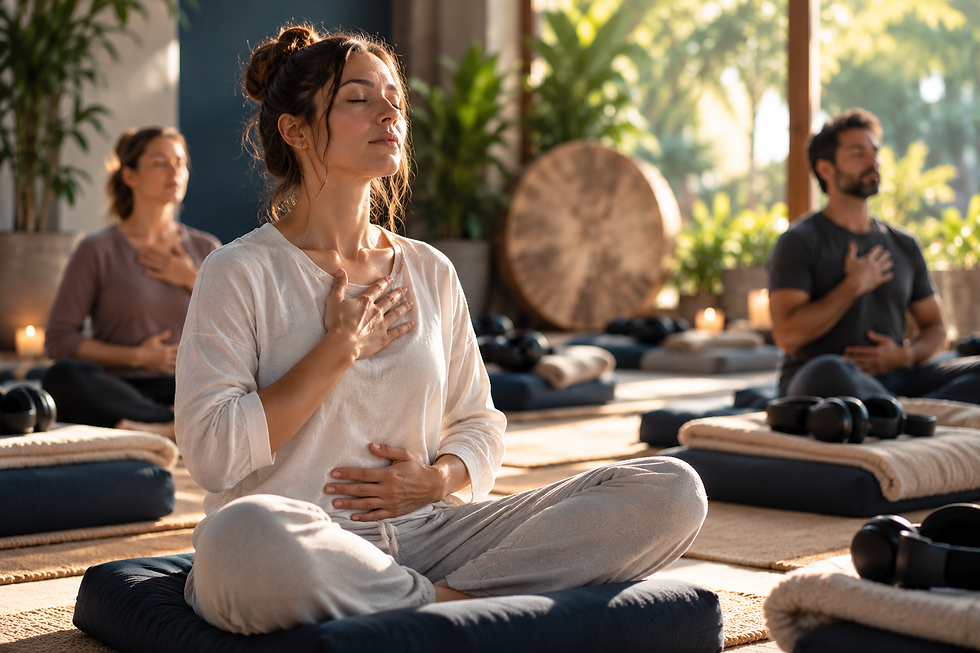
Every Pneuma Trance® session follows a clear progression from external attention toward introspection, stillness and expanded states of consciousness.
Whether you participate on-site or live online, you are guided throughout the entire process and encouraged to move at your own pace.
02
ON SITE
A dedicated space to go inward.
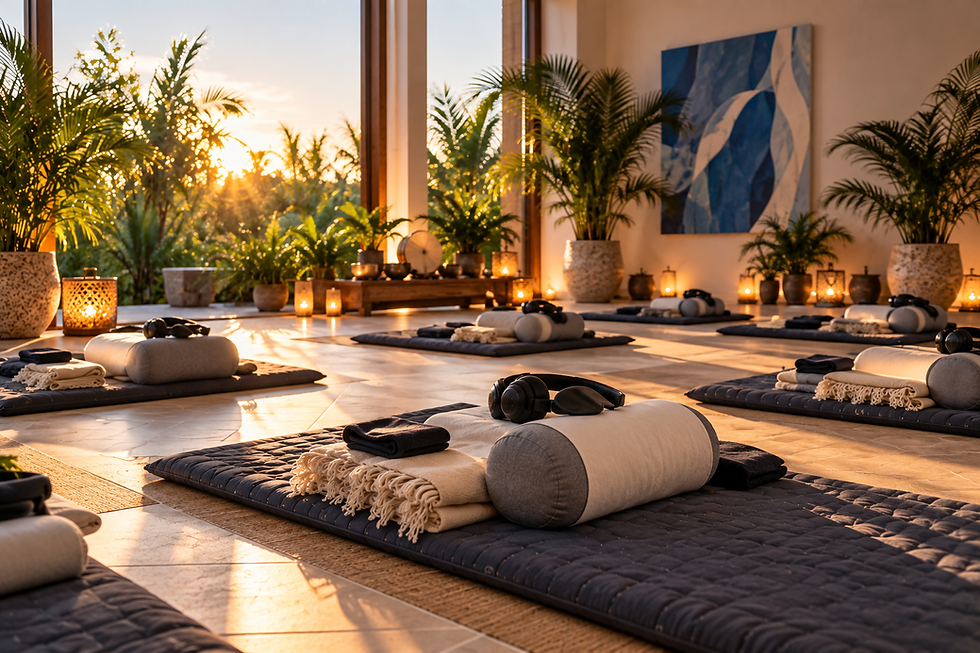
A carefully prepared environment where you can settle, disconnect from external distractions and experience the complete Pneuma Trance® session.
CHOOSE YOUR SETTING

LIVE ONLINE
The same journey from you own space.
Join live from a private, comfortable environment while remaining connected with your facilitator throughout the session.

03
BEFORE YOUR SESSION
PREPARE YOUR BODY, PREPARE YOUR SPACE.
Arrive without forcing an outcome.
A few simple steps can help you to feel more comfortable, focused and open to the experience.
-
Wear Comfortable clothing
-
Have a light meal beforehand
-
Stay well hydratated
-
No alcohol or recreational drugs
-
use the restroom minutes before beginning




06
YOU DON'T HAVE TO ACHIVE ANYHING
Pneuma Trance® is not a test of how deeply you can breathe, how intense the experience becomes or whether you reach a particular state.
You don't need to see images, experience emotional release, Non-alterate state of consciousness (ENOC) o have a dramatic experience, A quiet subtle session can be equally meaninful.
Nothing needs to be forced

07
HOW YOU ARE SUPPORTED
The facilitator introduces the process, guides regulation and introspective breathing, observes the participant's response, supports the transition into meditation and remains available throughout the return and integration period.
You are guided through the entire session.
The intensity and rhythm of the breathing can be reduced or modified when necessary.
Pneuma Trance® encourages participants to remain responsive to their body and communicate discomfort or the need to pause.

PHYSICAL SENSATIONS
Changes in breathing and attention may produce temporary physical sensations. These can include:
-
Tingling or pins and needles
-
Numbness, especially in the hands, feet or around the mouth
-
Temperature changes
-
Lightness or heaviness
-
Vibration or trembling
-
Dizziness or lightheadedness
-
Yawning or repeated yawning
-
Sighing or spontaneous deeper breaths
-
Muscular tension or cramping
-
Tightness or stiffness in the fingers, hands, arms or feet
-
Temporary difficulty fully opening or relaxing the hands
-
Hands or fingers drawing inward or curling
-
Carpopedal spasm
-
Temporary reduction in ease or range of movement
-
Changes in bodily perception
-
Sensations of pressure, expansion or contraction
With increased ventilation, carbon dioxide levels may fall temporarily. This can produce respiratory alkalosis and changes in ionized calcium, which can contribute to tingling, muscle cramps, stiffness and carpopedal spasm. Yawning and spontaneous sighing may also occur during changes in arousal, relaxation and autonomic regulation.
These sensations can vary considerably between participants and are not used as a measure of how deep or successful the session is. Persistent, severe or unexpected symptoms should not automatically be attributed to the breathing process and require appropriate evaluation.
Emotional Movements
As external distractions decrease and attention moves inward, emotions may become more noticeable.
Some participants may experience sadness, relief, joy, fear, calm, tenderness or emotional release. Others may experience little emotional change.
Neither response represents a better or deeper experience. Emotions are allowed to emerge without being forced or interpreted during the session.
Memory or Imagery
Some participants report spontaneous memories, colors, shapes, scenes, faces, places or other forms of internal imagery.
These experiences can feel vivid, subtle, fragmented or symbolic.
Material that emerges during an introspective or altered state is treated as subjective experience and is not automatically assumed to represent an exact or historically verified memory.
Deep Instrospection
Attention may move away from external concerns and toward internal sensations, emotions, thoughts, memories or questions that are normally less noticeable.
For some participants, this can produce a strong sense of inward focus or self-observation.
Deep introspection does not require dramatic imagery or emotional release. It may occur through simple, sustained awareness.
Stillness / Softness
Some experiences become quieter rather than more intense.
The participant may notice reduced mental activity, physical relaxation, emotional softness, silence or a sense of simply remaining present.
This quieter state is not considered less meaningful than a more intense experience.
Expanded Awareness
Some participants report temporary changes in their perception of time, space, bodily boundaries, sense of self or overall awareness.
The experience may range from subtle shifts in perception to a more pronounced Non-Ordinary State of Consciousness (ENOC).
Pneuma Trance® does not guarantee that an expanded state will occur, and reaching one is not required for the session to be meaningful.
Non-Ordinary State of Consciousness (ENOC)
Some participants experience changes in time perception, sense of self, bodily boundaries, internal imagery, awareness or depth of introspection.
Others remain fully ordinary in their subjective awareness while experiencing relaxation or stillness.
Pneuma Trance® does not guarantee an expanded state of consciousness.
Subtle or quiet experiences
Not every session produces strong sensations, emotions, imagery or perceptual changes.
Some participants experience only mild relaxation, increased bodily awareness, mental quiet or subtle internal changes.
A quiet session is still a valid experience. Intensity is not used as a measure of success.
SAFETY
Before you participate
Certain medical or psychological conditions require additional consideration before participating in Pneuma Trance®.
EXPLORE IN MORE DETAIL
ON-SITE EXPERIENCE
A dedicated space designed to help you disconnect from external distractions and move gradually into the experience.
Before the session begins, your facilitator explains the process, answers relevant questions and helps you settle comfortably into the space.
Everything needed for the session is prepared for you:
-
Tatami
-
Pillow
-
Blanket
-
Headphones
-
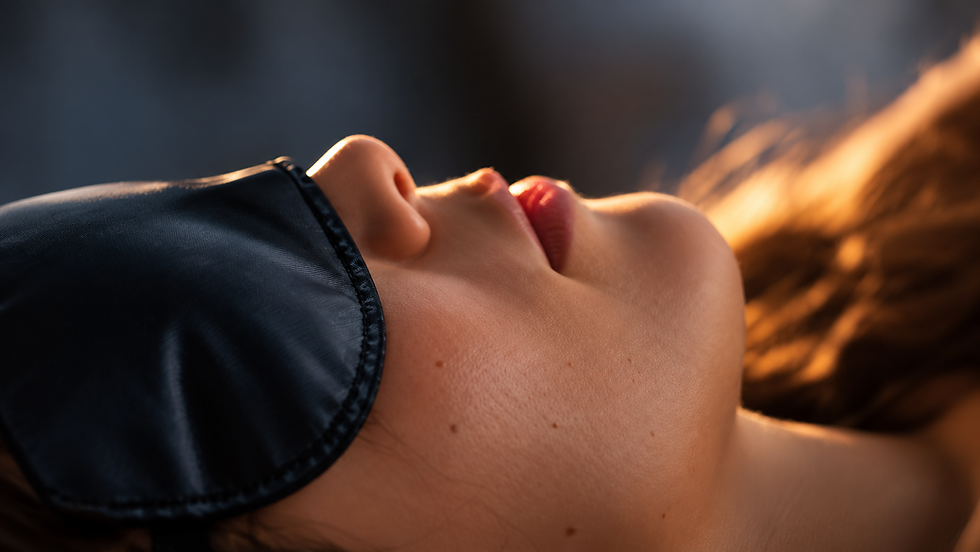
Eye cover
-
Water
-
A comfortable prepared environment
Arrive a few minutes before your scheduled session so you can settle without rushing.
No previous experience with meditation, meditative trance or introspective breathing is required.
FIRST SESSION?
You do not need previous experience with Pneuma Trance®, meditation, meditative trance or introspective breathing.Before beginning, your facilitator explains the process, what you may experience, how to communicate discomfort and how the session can be adjusted if necessary.There is no correct way to experience the session and nothing you need to achieve.Your role is simply to follow the guidance, remain aware of your body and allow the experience to develop without trying to predict, force or control it.You may experience physical sensations, emotions, imagery, deep introspection, stillness or very subtle changes. You may also experience little change at all.Questions can be addressed before the practice begins, and you can communicate with the facilitator at any point during the session.The experience develops at your own pace.
BEFORE YOUR SESSION - FULL PREPARATION
-
Wear loose, comfortable clothing that does not restrict breathing or movement.
-
Avoid arriving immediately after a heavy meal. A light meal beforehand is generally more comfortable.
-
Remain normally hydrated.
-
Do not participate while intoxicated or under the acute influence of alcohol or recreational drugs.
-
Use the restroom before beginning.
-
Avoid scheduling something that requires an immediate rushed departure afterward when possible.
-
Participants joining online should complete their physical setup before connecting.
LIVE ONLINE EXPERIENCE
The same guided Pneuma Trance® process, experienced live from your own private space.
Before beginning, prepare a quiet and comfortable environment where you will not be interrupted for approximately 90 minutes.
You will need:
-
Reliable internet connection
-
Computer or tablet
-
Camera positioned so the facilitator can clearly see you
-
Headphones
-
Eye mask or eye cover
-
Comfortable place to lie down
-
Pillow and blanket if desired
-
Water nearby
-
Phone silenced
-
A private environment without interruptions
Your facilitator remains connected with you throughout the session and guides each stage of the process.
Do not participate from a vehicle, public place or any environment where privacy, comfort and safety cannot be maintained.
THE 90-MINUTE JOURNEY
- Arrival & Orientation
The session begins with a brief introduction to the process and time to settle into the environment.
Your facilitator explains what to expect, answers relevant questions and helps you shift attention away from external demands.
This stage establishes a calm transition from ordinary daily activity into the inward-focused process that follows.
- Regulation
The practice begins gradually with gentle regulated breathing and bodily awareness.
The purpose is to establish comfort, rhythm and attention before moving into the introspective phase.
This is not about breathing intensely. The focus is regulation, awareness and preparation.
- Introspective Breathing
The breathing pattern gradually becomes more continuous and introspective.
Breathing is used as a tool to reduce external distraction and deepen internal attention.
Depending on the individual, changes may occur in bodily sensations, emotional awareness, perception and subjective state of consciousness.
Participants are not encouraged to breathe harder simply to create a stronger experience.
- Silence & Meditation
Breathing is not the final objective of Pneuma Trance®.
The respiratory phase functions as a threshold into stillness, meditation, interoception and observation without judgment.
As the breathing settles, the participant is invited to remain present with whatever emerges without trying to produce, control or immediately interpret the experience.
- Return & Integration
The session concludes gradually.
-
Participants are given time to reorient physically and mentally before sitting or standing.
-
There is no requirement to immediately explain or interpret everything that occurred.
-
Some experiences become clearer only after reflection.
Integration
-
Some experiences are immediately understandable. Others may require time.
-
After the session you may choose to:
-
write
-
reflect quietly
-
rest
-
draw
-
observe dreams or imagery
-
notice emotional changes
-
discuss relevant material with an appropriate professional when needed
-
Integration does not require forcing an interpretation.
After Your Session
-
Return gradually.
-
Allow yourself several minutes to become fully oriented.
-
Drink water.
-
Stand slowly.
-
Notice how you feel physically and mentally before immediately returning to demanding activity.
-
If you still feel substantially disoriented, allow additional time before driving or performing activities requiring full concentration.